Showing posts with label The Social Network. Show all posts

Monday, April 11, 2011

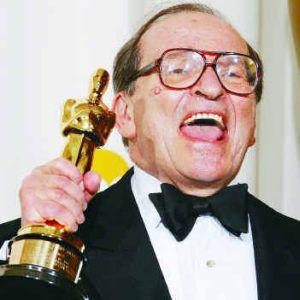
In Memory of Sidney Lumet

I don't often write these posts over fallen heroes because it's a challenge to make a meaningful one when it seems like half the internet has already idolized the deceased before their last breath has even sounded but regardless, Sidney Lumet is an exception.


In this case, it's special because Lumet is not some tragic case and his death doesn't sound out any sorrow in me (he was 86 at the time of his death and was responsible for more great films than some whole careers ever house). Instead it's a way to look back and bask in the memories of one man who dedicated his life to making so many amazing movies.

What makes Lumet even more special for me is that, believe it or not, no one single person changed the way I view movies more than Sidney Lumet did. It all stems from his book simply titled Making Movies. Roger Ebert said that if you only read one book on filmmaking, make it that one and I second this.

This is a book as quotable as any great critic such as Kael, Farber, Bazin or even Ebert himself and is an intimate, loving and thoroughly technical analysis of film as seen through the eyes of the artist creating it.

Maybe most valuable is Lumet's chapter on style which is, to me, the single greatest piece ever written on the subject. Lumet dissects style (the most misused word in film as he calls it) in a way that is profound and makes sense. It made me realize that filmmakers like Burton and Gilliam are not stylists but decorators and that, most importantly, as the French also used to say, you cannot separate style from substance nor substance from style. The two create each other and together make something wonderful.

The example Lumet gives is of his debut masterpiece 12 Angry Men, taking place entirely in one room, starting by filming in close up and gradually pulling the camera back and moving it down so that you can begin to see the ceiling; feeling as though the room is closing in as the tension mounts. The final shot, outside the room, is thus placed high and filmed with a wide lense to allow the sense of relief. You don't notice it, but you feel it, because it makes sense to the story. That's film style.

That was the birth of a career that produced the big names like Serpico, Running on Empty, The Pawnbroker, Prince of the City, Dog Day Afternoon, Network, The Verdict, A Long Day's Journey into Night and most recently Before the Devil Knows Your Dead. These alongside the titles that are not considered as major but still bear the worth to warrant the accolades: Murder on the Orient Express, The Wiz, Equus, Family Business, Q&A, Night Falls on Manhattan, Critical Care and Find Me Guilty, which featured Vin Diesel's best performance.

I think what characterised Lumet's body of work was not some consistent visual style (he gave the movie what it needed like a natural technician) but that he was drawn to intelligent works about intelligent people: often men torn between doing what they believe to be right and doing what's actually best. His movies were not about action and weren’t flashy just for the sake of it; (save The Wiz, which is one of the odd one's out in his oeuvre) but are built upon the suspense of human interaction, of internal drama and of real danger.

Lumet openly admits in his book that some projects he took on just for the money. That's fine, it's not too hard to guess which films fall under that banner, but regardless Lumet always brought style and smarts to them. Lumet made bad films but he didn't often make boring ones.

Thus, I can't shed a tear for Lumet even though I'm sad to see him go. I'm too busy smiling while looking back and remembering everything he left us. America may have lost one of it's last remaining greats but the movies will live on forever.

Tuesday, March 1, 2011

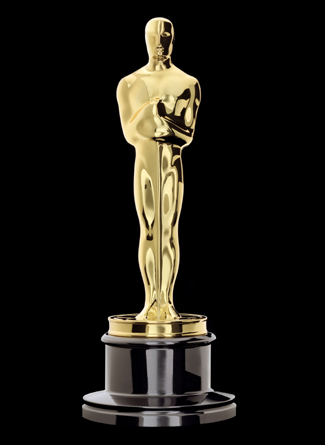
The King Spoke and He Said: The Oscars Kind of Sucked This Year

  • 2010 will be remembered as the year that nothing worth remembering happened at the Oscars.
  • Anne Hathaway could very well be a great Oscar host with lots of life and energy (if she'd give up the oh my gosh I'm hosting the Oscars references), but what was with James Franco? He looked like that if he didn't go backstage and start cooking up a shot he was going to go into withdrawl.
  • I think the Academy found their host next year in Kirk Douglas.
  • It's sad that the most talked about thing this year was Melissa Leo dropping the F-bomb.
  • There was a moment when Wally Pfister was accepting his award when he thanked Christopher Nolan for being his master and Nolan half smiled as if to say, "Yeah thanks even though it should be me up there."
  • Apparently Ophrah talking about the human condition did nothing for Joel Cohen who decided he'd rather pick his ear than listen.
  • Randy Newman has been nominated for Best Song 20 times and won twice which is kind of ironic because he essentially made a career out of writing the same song over and over again (to be fair, his songs were one of the things that kept the Princess and the Frog from being great). Out of four nominees, only the 127 Hours song had any personality at all. However, in his attempt to be "good TV" Newman did give one of the funniest and lightest speeches.
  • Tom Hooper managed to make thanking his mom actually sound sweet and meaningful.
  • I have no idea who this kid who won best short feature is, but he's certainly going places.
  • Susanne Bier won an Oscar. This makes me happy. She's one of my favourite directors and doesn't get enough credit for what she does.
  • You can tell Aaron Sorkin is a great writer. He gave the most literate and confident speech. He reminds me a bit of David Mamet.
  • I desperately wanted the Social Network to win more awards just so there could be more hilarious cutaway shots of David Fincher looking completely unimpressed as people thanked him.
  • Was it just me or were Justin Timberlake and Mila Kunis really awkward to watch?
  • The opening montage was so uninspired that I thought for a second I was watching Saturday Night Live
  • The opening monologue wasn't much better. Where is Carrie Fischer when you need her?
  • Billy Crystal managed to revive the show a little and a video was played of Bob Hope doing one of my favourite Oscar lines "Or as it's called at my house: passover," but this was awkwardly melded into a way to introduce Robert Downey Jr. and Jude Law
  • Speaking of: if there has to be 2 hosts, these 2 get my vote for next year.
  • Since when have the honorary Oscar recipients ever been brought on stage and not allowed to make a speech?
  • How did David O. Russell and Christian Bale work together without anyone getting hurt?
  • I got 2 wrong this year and 3 wrong last year. I'm getting better

Sunday, February 27, 2011

The King Will Speak at Tonight's Academy Awards

I write 2 Oscar posts. The one I am doing right now and the one I will write after the show. I personally don't see the need for any more than that because what makes the Oscars fun is the concept of the Oscars and what they represent, which is glamour and old Hollywood excess. It doesn't matter who wins. Winning an Oscar is about the equivalent of picking a name out of a hat (except foreign film). The voter need not see a single one of the nominated films to cast their ballot and they don't even need to be the one doing the voting. So, the awards are meaningless, which is why I don't dwell on them and don't get up in arms over Christopher Nolan not getting nominated or whether or not Toy Story 3 should be allowed to be nominated in Best Picture and Best Animation. Life's too short, let's just enjoy the ride and see how my ability to predict political voting is this year.

Best Foreign Film: This category is always up in the air and one I get wrong because A) I haven't seen all of the movies and B) the voters have to have seen all the movies. Regardless, I'll take my best guess and do what I did last year, going with the Golden Globe choice of Civilization because I think Susanne Bier is a brilliant filmmaker who doesn't get nearly the credit she is due in North America.

Best Animated Feature: The truly best film in this category will not win. Nothing has a shot over Toy Story 3, which made the most money in 2010 and tricked just about everyone into thinking it was a great movie due to 10 minutes at the end.
Who Should Win: The Illusionist
Who Will Win: Toy Story 3

Best Adapted Screenplay: I think this will be one of the categories where the true best will shine and may be one of the only awards, besides Original Score, that the Social Network will walk away with.
Who Should Win: The Social Network
Who Will Win: The Social Network

Best Original Screenplay: I always wonder what the Academy considers to be a good screenplay. Is it the dialogue, the structure, the characters? If it's dialogue and character than Inception doesn't have a chance, not it it does anyway. I actually have the insider advantage here as I covered the screenplay for The King's Speech about a year ago and indeed, it was very good. I wonder if I'll get a raise when it wins?
Who Should Win: The King's Speech
Who Will Win: The King's Speech

Best Director: The Golden Globe went to Fincher, the DGA went to Hooper; the DGA usually is the definitive word. If Hooper wins this one, and I think he will, The Social Network doesn't have a chance at best picture as it will probably also sweep the acting awards as well and Oscar generally doesn't argue with the DGA. Poor Aronofsky, his time will come eventually.
Who Should Win: David Fincher
Who Will Win: Tom Hooper

Best Supporting Actress: This is a tough one. I think we can strike out Jacki Weaver because Animal Kingdom doesn't have the push behind it that would lead to a win. Melissa Leo and Amy Adams could potentially split the vote and cancel each other out for The Fighter, leaving Helena Bonham Carter and Hailee Steinfeld. Oscar loves the British but Steinfeld should win for her scene alone in True Grit between herself and the crooked business man. Last year in the writing category I picked the actual best script and was wrong so I think I'll go with the obvious this year instead.
Who Should Win: Hailee Steinfeld
Who Will Win: Helena Bonham Carter

Best Supporting Actor: It's down to Christian Bale and Geoffry Rush. Oscar likes weight loss and weight gain but King, I think, is going for a sweep and Oscar almost always votes British so I will too.
Who Should Win: John Hawkes
Who Will Win: Geoffry Rush

Best Actress: I think this one is fairly obvious although I'm not so sure Portman truly was the best as she was just one part of Black Swan's whole. I found Nicole Kidman in Rabbit Hole to be far more engaging to Portman's "acting" in Black Swan. However, Oscar likes stars who put themselves through physical strain and Portman certainly did that, plus, Kidman gave one of those "quiet" performances that Christina Bale, at the Golden Globes, said no one really ever gets noticed for.Wouldn't it be fun if Oscar pulled a punch and let Anette Benning, who is just as deserving, have the win?
Who Should Win: Nicole Kidman or Anette Benning
Who Will Win: Natalie Portman

Best Actor: Let's continue to vote British.
Who Should Win: Jesse Eisenberg
Who Will Win: Colin Firth

Best Picture: Not much to say here. Once again, despite 10 nominees, just as it always was when there was 5, the race comes down to two. The Social Network was the best movie of the year for me, but the King's Speech is more of an Oscar movie and currently has much more momentum behind it. Plus, if Hooper and Firth win there's no chance for the Social Network to take it.
Who Should Win: The Social Network
Who Will Win: The King's Speech

Friday, October 8, 2010

The Social Network (5 out of 5)

It may be one of life’s cruel little ironies that someone as socially inept as Mark Zuckerberg would be the one person to create the world’s most popular online social networking site. Then again, when you break Facebook down to its philosophical essentials, maybe it is perfect for guys like Zuckerberg who function socially at their best when they are an arm’s length away. It’s a place where we are all related and can keep in touch with friends from all over the world but all viciously. All of a sudden you can contact a friend without ever talking to them, meet the girl and find out her relationship status without so much as awkward eye contact, and who needs to go to the party when you can live it after-the-fact through photo albums, all located on one convenient page? That's the double-edged sword The Social Network attempts to shed light on: Zuckerberg has dually connected us all and also made us part of his own personal comedy. No wonder Facebook started out as a drunken prank.

It all starts in a Havard pub. Zuckerberg drones on to his ex-girlfriend about how badly he wishes to be part of one of Harvard’s prestigious clubs in order to help his social standing. He doesn’t quite realize that they aren’t dating anymore. He is rude to her and she tells him to go away; she was just being nice to him, they aren’t even friends. Zuckerberg, in what could be either hurt or rage (it’s hard to tell if the young man, isolated behind a wall of stone cold intelligence even knows how to feel), he goes home, gets drunk and comes up with the idea for a website where people will be able to rate the hotness of girls on campus. In order to do that he hacks into all of the campus houses and downloads the girls’ pictures onto his site and sends it out. Soon the site is so popular that it crashes Harvard’s server at 4:00am in the morning and Zuckerberg is being investigated.

This catches the eye of Cameron and Tyler Winklevoss (Arnie Hammer and Josh Pense) and their friend Divya Narendra (Max Minghella), all who are members of the coveted Phoenix Club and have the idea that what Harvard needs is an online dating site. They imagine a site with profiles and pictures and enlist Zuckerberg to write the code. Zuckerberg agrees but quickly morphs the dating site idea into a social network site and, while delaying meetings and not responding to e mails, writes the code for Facebook, keeping the other three in the dark.

The story is framed by the present as Zuckerberg battles two lawsuits, one from the Winklevoss’ who claim he stole their idea and another with his former best friend and Facebook CFO Eduardo Saverin (Andrew Garfield). Saverin is suing Zuckerberg for fazing him out of the company and screwing him out of many dollars that should rightfully be his. When Zuckerberg moves the Facebook operation to LA on the advice of Napster founder Sean Parker (Justin Timberlake), Saverin decides to hang back in New York and talk to ad agency's in order to start making money off the website. Saverin and Parker don’t see eye to eye (one is a business graduate and the other is known as a party animal with a reputation for drugs and young girls) and Saverin is instantly rubbed the wrong way when he arrives in LA to find that Parker is setting up meetings for Zuckerberg. Zuckerberg is drawn to Parker, despite warnings from Saverin because, presumably, Parker is everything Zuckerberg doesn't have the internal capabilities to be. Zuckerberg doesn't need a business partner, he's too conceited to realize that he has zero business acumen, but rather a role model to idolize and learn from. Soon, after Facebook goes corporate, Saverin’s shares are diluted down to nothing while Zuckerberg’s and Parker’s stay the same.

Whether the impact of any of this ever emotionally registers to Zuckerberg is part of the film’s main fascination. As played by Jesse Eisenberg, who gravitates towards the roles of intelligent outsiders, Zuckerberg is cold but not calculating. His favorite subject is himself but one gets to wondering if that’s because Zuckerberg loves himself or simply because he doesn’t know anything else. When Zuckerberg tells the Winklevoss’s attorney that he is not worth Zuckerberg’s attention, in one of the film’s best scenes, one gets the sinking suspicion that The Social Network has became much more than simply a chronicle of the creation of Facebook. It’s the story of a man who is trapped inside himself because he can’t see anything beyond his own personal circle. When he hurts or steps on people he doesn’t do so to get to the top, he doesn’t even really care about money, but because he only knows how to get what he wants. No one else factors into the equation. Eisenberg masterfully captures this sad young man, too smart for his own good, never registering any emotion lurking below the surface. Because Eisenberg is so good, even when Zuckerberg isn’t the focus of a scene, his presence is always looming somewhere, his detracted cruelty always at the heart of everything.

The film was directed by David Fincher who proves that a great movie can be made from just about anything. Like all of Fincher’s work, the film is dark, casting a shadow on the wounded and manipulated lives of these characters and focuses, not so much on Facebook, as on a man who is driven, like John Doe from Seven or Robert Graysmith in Zodiac, to manipulate society in his favor, in order to achieve his own personal means. In a way, like all of Fincher’s greatest characters, Zuckerberg is an enigma. He’s the youngest billionaire in America, has gone to great lengths to create Facebook, stepping on people, stabbing backs, conning people out of money and yet he did it all because of one girl that he is too oblivious to see didn’t want anything to do with him. Maybe he has a heart after all.